
Webbies
Skip to content

Healthcare SEO agency · Canada

Healthcare SEO services built around how clinics are found and chosen.

Webbies helps Canadian clinics, medical practices, multi-location clinic groups, and virtual-care providers connect valuable searches with the right service, practitioner, location, and contact or booking path.

Our healthcare and medical SEO work combines market research, page architecture, useful content, technical SEO, local visibility, and evidence-led refinement.

MedCare Clinics
MD Treatment Lounge
Virtual Health Clinic
Hamilton-basedDirect strategic involvement.
Across CanadaClinics and healthcare organizations.
Accountable deliveryEngagements are led by Paras and delivered by the Webbies team.

Healthcare search work in practice

Named results across three healthcare models.

These Google Search performance results show relevant experience across a multi-location medical network, a treatment-led medical-aesthetics clinic, and a virtual-care business.

The campaigns targeted service, treatment, clinic, location, and provider searches made by people looking for a place to enquire or book. This was commercially relevant search traffic rather than broad, unrelated health information traffic.

01 · Clinic network
3,850 → 9,770

Monthly Google Search clicks for MedCare Clinics.

Search Console figures reported in the case study show monthly clicks increasing 154%, from approximately 3,850 in the original reporting period to 9,770 in May 2026. Monthly impressions increased from approximately 109,000 to 435,000 over the same comparison.

Webbies organized clinic, service, and regional content, strengthened internal linking, and refined the wider search system for a growing Ontario clinic network.

Source note: The public case does not identify the precise starting month. Complete appointment, call, and revenue attribution was unavailable.

Read the MedCare Clinics SEO case study
02 · Medical aesthetics
202 → 829

Monthly Google Search clicks for MD Treatment Lounge.

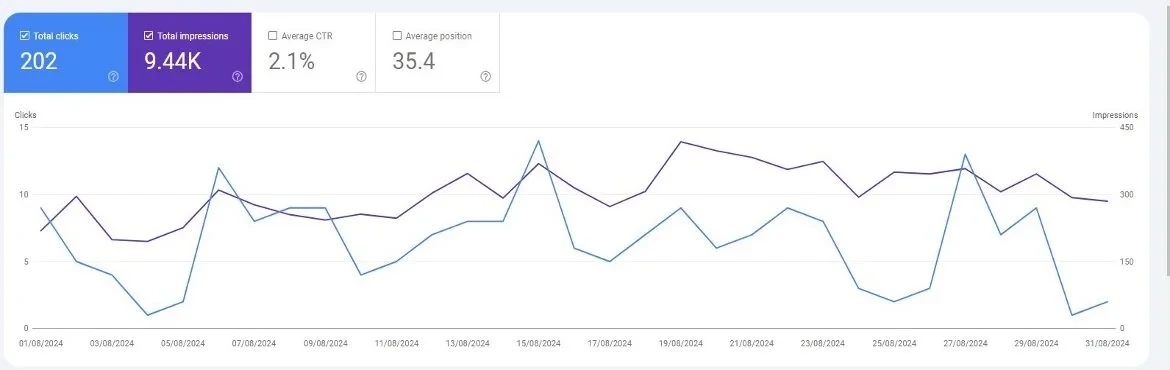
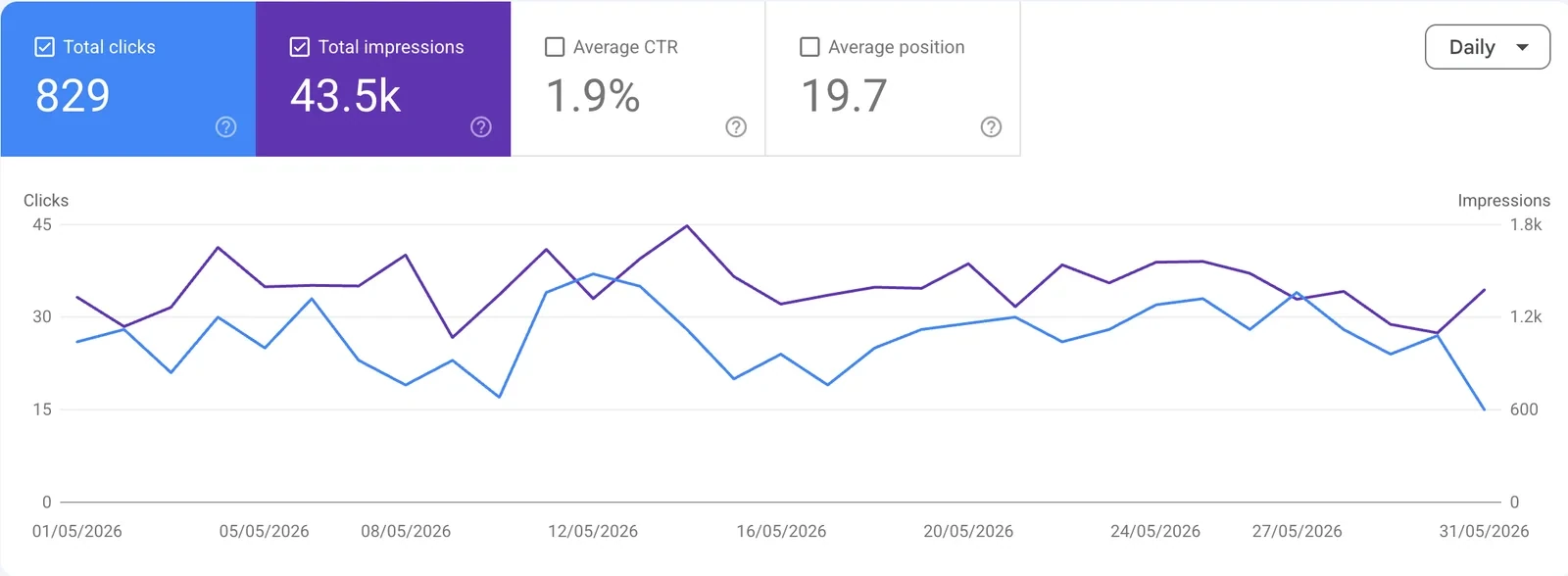
The exact Search Console comparison shows monthly clicks increasing approximately 310% from August 2024 to May 2026, while impressions increased from 9,440 to 43,500.

The May comparison represents 829 monthly Search clicks from treatment and nearby provider searches. Those searches show active local service interest rather than broad health information traffic.

The work connected treatment and regional content, technical and on-page improvements, Google Business Profile activity, and ongoing local-search optimization for a Niagara medical-aesthetics clinic.

From February through June 2026, the Business Profile recorded 2,736 interactions, 27.3% above the corresponding 2025 period. This supports the same local visibility pattern shown by the clinic's search growth.

03 · Virtual care
2,580 → 8,800

Monthly Google Search clicks in four months.

Monthly clicks increased approximately 241% from May to September 2023. Impressions increased from approximately 116,000 to 283,000, while average position improved from 31.2 to 18.9.

Webbies improved the site's service structure, content, technical SEO, internal linking, and ongoing search optimization for a virtual-care business.

Historical context: The business was later acquired and the website was replaced. These figures describe the campaign and website managed during the engagement, not the current site.

Read the Virtual Health Clinic SEO case study

Exact first-party comparison

MD Treatment Lounge Search Console evidence.

These screenshots document the Niagara campaign's August 2024 and May 2026 Search Console comparison. The work focused on treatment searches and regional pages intended to reach people looking for a clinic in the Niagara service area.

August 2024
May 2026

Source: Google Search Console. August 2024 compared with May 2026. Results are historical and vary by website, market, competition, implementation, and investment.

Where clinic search gets stuck

More visibility does not help when the wrong page answers the search.

Healthcare SEO is rarely solved by adding more keywords to a homepage or publishing a page for every service and city. The more useful question is whether each important search has one accurate, relevant destination and a clear next step.

The first move is not automatically more content. It is to find where the search journey breaks, decide which destination should own each need, and strengthen or consolidate the pages already doing the same job.

01

One broad page carries too many decisions.

A general clinic page may be trying to represent every service, practitioner, and location. That makes it less focused for a specific need, while visitors have to work through irrelevant information to find what applies to them.

02

Service, practitioner, and location pages overlap.

Pages created without clear ownership can compete with one another. A location page may repeat a service page, several regional pages may differ only by city name, or practitioner pages may add nothing useful beyond the main clinic page.

03

The website, local profile, and next step disagree.

A Google Business Profile may list services or hours the website does not explain. The website may target places the clinic does not genuinely serve. The contact or booking path may then ask the visitor to start over.

One connected clinic search system

Service, practitioner, and location pages should not compete for the same search.

People may search for a service, treatment, practitioner, nearby clinic, eligibility question, or way to book. Webbies assigns each destination a clear job before deciding what should be created.

01

Service or treatment pages

Explain what the organization provides, who the service may be relevant to, where it is available, and the appropriate next step. Important clinical facts and claims move through the clinic's qualified review process.

02

Practitioner or provider pages

Clarify credentials, scope, services, and clinic locations when that information genuinely helps someone choose. A thin page created only to target a name or specialty may not need to exist separately.

03

Clinic or location pages

Represent the services, practitioners, hours, contact details, and local information genuinely specific to the clinic. A location page must be useful on its own without becoming a city-name substitution.

04

Supporting answer and resource pages

Resolve important questions that cannot be answered well on a commercial page. Each resource needs a clear purpose, factual source, reviewer, and update owner.

05

Contact or booking destinations

Give every relevant page an appropriate next action without overstating urgency, suitability, or expected outcomes.

The model changes with the organization. MedCare needed a scalable relationship between clinics, services, and regional information. MD Treatment Lounge connected treatment and local intent. Virtual Health Clinic needed clearer service destinations for broader-market demand.

Architecture principle

Create a page when there is a distinct visitor need, enough unique information to satisfy it, and someone who can keep it accurate. Strengthen or consolidate pages when they repeat the same job.

Healthcare and medical SEO services

A focused search system, not a fixed list of monthly tasks.

The work begins with the clinic's market, website, local presence, and available evidence. Scope follows the strongest constraint rather than a preset volume of pages or reports.

01

Find where valuable demand is being lost.

Webbies reviews how people search for the clinic's real services, how competitors earn visibility, which pages Google already recognizes, and where useful demand has no suitable destination.

The review can include current rankings, Search Console data, Business Profile performance, competitor pages, website structure, existing content, and the path from search to enquiry.

02

Give each important search one clear destination.

We define the roles of service, practitioner, clinic, location, and supporting pages. That means deciding what should remain together, what deserves its own page, what should be consolidated, and how related information should connect.

03

Implement the connected improvements.

Depending on the starting point, Webbies can correct crawl and indexing problems, improve titles, headings, internal links, redirects, and page structure, create or strengthen useful content, align the website with the Google Business Profile, and support priority pages with credible evidence, relevant mentions, and links.

When the website itself is holding the strategy back, Webbies can coordinate the necessary website and search-architecture improvements.

04

Review, measure, and refine.

Important clinical content moves through the agreed review process before publication. Search and business-enquiry evidence then shows which queries and pages are gaining traction, where the journey remains weak, and what should improve next.

Start with the strongest first move.Request a healthcare SEO review

Direct strategic involvement

Strategy stays close to the work.

Paras leads healthcare SEO engagements, and the Webbies team carries the strategy from market analysis and page architecture through content, implementation, authority development, and ongoing review.

The clinic stays involved where its knowledge is essential. Webbies should not guess at clinical facts, service availability, practitioner scope, or professional requirements that the organization and its qualified reviewers are better placed to confirm.

Responsibilities, approvals, access, and update ownership are defined before production begins, so the work remains accountable as the website and clinic change.

Direct accountability. One connected direction from the first diagnosis to the next approved priority.

Paras, who leads healthcare SEO engagements at Webbies.
01 / 08
Studio portraitDirect accountability behind the work.

Useful content with accountable boundaries

A search strategy the clinic can maintain and measure responsibly.

Healthcare content needs to be useful in search, accurate for the organization, and supported by a review process that remains clear after publication.

01

Webbies manages the workflow and implementation.

Webbies can manage market and search research, page architecture, drafting, technical and local-search implementation, internal linking, authority development, website accessibility checks defined in the project scope, and the content update schedule.

The team can also flag privacy-sensitive choices in forms, tracking, appointment tools, and third-party services, then implement the configuration approved through the clinic's review process. Formal accessibility-conformance, privacy, legal, and regulatory determinations remain with appropriately qualified advisers.

02

The clinic and its qualified advisers approve sensitive facts and uses.

The clinic confirms clinical facts and treatment claims, practitioner credentials and scope, current service availability, profession- and province-specific advertising requirements, and the final use of forms or tools that may collect personal or health information.

For important content, both sides define the factual source, qualified reviewer, approval status, publication date, and update responsibility. Canada's federal privacy guidance provides one national starting point; professions and provinces also maintain their own requirements, such as Ontario's physician advertising policy.

Those references are starting points, not a blanket compliance claim or a substitute for advice specific to the organization.

01

Search visibility

Impressions, rankings, indexed pages, and query coverage show whether the clinic is becoming easier to find. They do not prove contact.

02

Organic website visits

Clicks and landing-page activity show that people reached the site through search. They do not prove the visitor was qualified.

03

Business actions

Calls, forms, bookings, directions, and profile actions support attribution only when tracking is reliable and appropriate for the clinic's privacy obligations.

04

Business outcomes

Qualified enquiries, consultation requests, and appointment requests can be evaluated only when they are safely and reliably connected to the search journey.

Patient records and medical details should not be collected merely to improve marketing attribution. Webbies uses the most useful evidence the clinic can support without turning a larger claim into an invented one.

Different clinic, different search structure

A single clinic, a network, and virtual care need different search structures.

Select the model closest to the organization. The right architecture depends on how services, practitioners, locations, eligibility, and the next action relate to one another.

Single-location clinic or doctor-led practice

A smaller website still needs clear page ownership.

The priority is usually a clear relationship between the clinic's main services, practitioners, local presence, and next action. A smaller website does not need a page for every keyword variation.

Primary relationships
  • Core services
  • Practitioners
  • Local profile
  • Next action
Practical outcome

A focused clinic website where each important search reaches one useful destination.

Before an engagement

Clear answers before the first recommendation.

What the review includes, how healthcare SEO differs, when a website change is justified, and what realistic timing and accountability look like.

What happens after I request a healthcare SEO review?

Share the website, priority services, locations, and the problem you are trying to solve. Webbies will review the information, assess whether the engagement fits, and identify the most useful first area to investigate before recommending scope.

If a deeper audit or written roadmap is needed, its scope is agreed before that work begins.

Is healthcare SEO different from medical SEO or SEO for doctors?

These terms often describe the same broad service category. The fundamentals remain technical accessibility, useful pages, clear internal links, local relevance, authority, and measurement.

The healthcare-specific work is organizing those foundations around services, practitioners, clinic locations, clinical review, and appropriate contact or booking paths.

Will the clinic need a new website?

Not automatically. An existing site may need only targeted improvements.

A redesign or rebuild becomes relevant when the site's structure, performance, accessibility, content management, or enquiry path prevents the search strategy from working. Where that is the constraint, review Webbies' Web Design & Development services.

Can Webbies work with an internal team or several clinic locations?

Yes. Webbies can lead the search strategy and implementation while coordinating with clinic operators, practitioners, internal marketers, developers, and qualified advisers.

Access, responsibilities, review steps, and update ownership are defined before production begins.

How long does healthcare SEO take, and what affects the cost?

Technical corrections and clearer indexing signals may be recognized relatively early, but competitive visibility usually develops over months rather than days.

Timing and cost depend on the site's condition, services, locations, competition, existing authority, content requirements, approval process, implementation speed, and ongoing responsibilities. The Canadian local SEO cost guide provides general planning context; a recommendation should follow a review of the clinic's actual constraints.

Can Webbies guarantee first-page rankings or more patients?

No. Webbies can research the opportunity, improve the website and search system, strengthen relevant authority, implement the work, and respond to performance evidence.

Search results, competitors, demand, and patient decisions remain outside any agency's complete control.

Start with the search constraint

Find the highest-priority search opportunity for your clinic.

Share the website, priority services, locations, and current challenge. Webbies will assess fit and identify the most useful first move before recommending a scope.

That move may be a technical correction, a clearer page system, stronger service content, better local alignment, relevant authority work, or a more direct path from search to enquiry.

For clinic owners, practice managers, and healthcare marketing teams across Canada.For business enquiries only. Please do not include patient-identifying information or medical records.