
SEO & website strategy
SEO for logistics companies: a practical guide
Help customers find the freight services you actually provide, understand their options and take the next step.
SEO for logistics companies means improving your website so customers can find your freight, transport, warehousing or fulfilment services through search. The work connects the right searches with useful pages: what you move, where you operate, how the service works and what a customer needs to request a quote.
A useful logistics SEO plan starts with your business model and existing website. It then combines keyword research, service and route pages, technical fixes, credible project information and measurement. This guide explains how to put those pieces together.
Webbies’ work with BriCargo includes rebuilding its website around freight services and destinations, URL mapping, redirects and launch checks. The BriCargo example below shows how that work relates to the page structure.
On this page
Choose logistics keywords around the customer you want
Start with the services you can fulfil and the people who buy them. A freight forwarder, a trucking company and a warehouse may all describe themselves as logistics businesses, but their customers need different answers.
- Freight forwarders: customers may search by shipping mode, origin and destination, cargo type or the help they need arranging a shipment.
- Carriers and trucking companies: useful searches may concern transport coverage, equipment, load requirements and the type of freight accepted.
- Warehouses and 3PLs: prospects may need storage, receiving, fulfilment, handling capabilities or a facility in a suitable location.
- Logistics software providers: buyers may be comparing platforms, integrations and workflows. Those searches serve a different task from arranging freight.
Build a short list of actual services, markets and customer questions. Include operational limits: a business handling commercial pallets should not create content that implies it accepts every small parcel, household move or restricted commodity.
Check demand, intent and the pages already appearing
Use your Search Console queries, customer questions and a keyword research tool to identify possible targets. Then inspect the search results in your intended market. Note whether the results mainly help someone hire a provider, compare options, learn a process or use a tool. That distinction guides the page you need.
Prioritize a search when you can serve that customer, provide a useful answer and improve on a specific weakness in the existing results. A smaller search can be worthwhile when it closely matches your business. Broad searches can also matter when their intent fits; they should be assessed rather than automatically discarded.
Keep recruitment, shipment tracking and unrelated software searches separate from new-customer acquisition. They may generate valuable website activity, but they do not all represent someone ready to buy your freight service. Keyword volumes are estimates, and overlapping phrases should not be added together as a forecast of visits or enquiries.
Map each customer task to a useful page
Give each important service or customer task a clear home on the website. Related phrases can belong on the same page. Create a separate route, destination or facility page when it can answer a genuinely different set of questions.
The searches below are illustrative examples. Use them only where the service and coverage match your business.
| Customer search or task | Suitable page | What the page needs to answer | Useful next step |
|---|---|---|---|
| Ocean freight forwarding in Canada | Ocean freight service page | Available shipment options, coverage, accepted cargo, process and quotation requirements. | Ask about a shipment. |
| Air freight from Canada to Germany | Route or destination page, where there is enough distinct information | Actual origin/destination coverage, service options, shipment limits, process and timing inputs. | Request availability and a quote. |
| 3PL warehouse in Mississauga | Page for a real facility and its capabilities | Location, receiving arrangements, storage or handling capabilities, suitability and contact details. | Discuss storage or fulfilment requirements. |
| LCL vs FCL shipping | Explanatory guide | How the options differ, when each may suit the shipment and which factors affect the comparison. | Review the relevant ocean freight service. |
| Track an existing shipment | Tracking or customer-support journey | Where to enter the reference and how to get help with the shipment. | Use the actual tracking or support function. |
A useful structure might connect an ocean freight service page to relevant destination pages and an LCL-versus-FCL guide. Each page should explain its own task and link to the next useful answer. Keep a record of the main query group and intended URL so new content strengthens the structure instead of creating competing copies.
For a destination page, explain what changes for that shipment: available services, pickup or delivery arrangements, relevant preparation and known limits. Changing only a country or city name gives the customer little reason to use a separate page. A shipping destination also does not establish that you have an office there.
A real example: BriCargo’s service and destination structure
Webbies worked on the Africa United Logistics to BriCargo rebrand and website rebuild. The company’s old name emphasized Africa, while its freight business served a wider market. The website needed to explain that broader offer while providing a planned route from the existing site to the new one.
What changed in the website
- Services and destinations had distinct roles. The rebuild organized information around the type of freight service and the market being served. That gives a visitor different ways to investigate the same shipment.
- The transition was part of the work. Webbies mapped old URLs to new destinations, implemented redirects and completed launch checks alongside the rebuild.
- Project material made the offer more concrete. The website used real freight photographs, including vehicles, machinery and palletized cargo, to help explain the work.

What the published search evidence shows
The Search Console screenshot shows 506 clicks and 34.3K impressions. The case study identifies this as BriCargo’s first three months after launch; the chart covers April–June 2026.
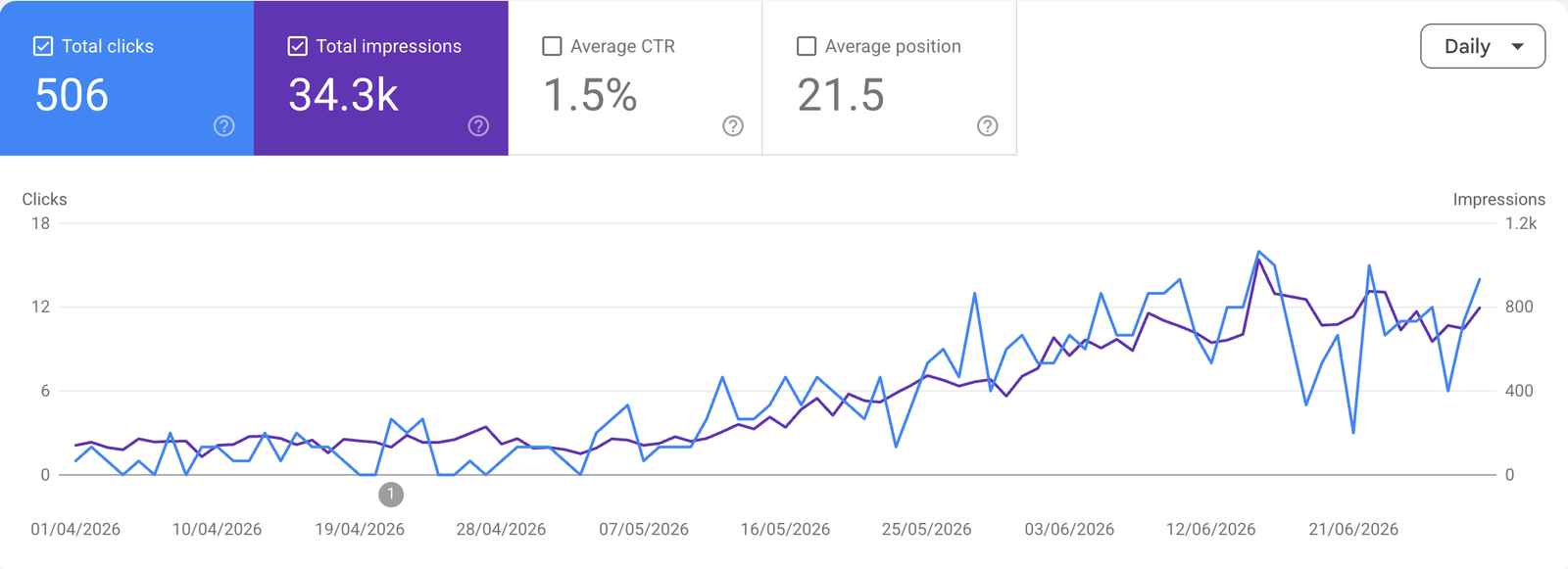
These are search totals for the period shown, not quote requests or a measured before-and-after increase. The screenshot does not separate branded, service and destination searches, or isolate the effect of any one change.
What to apply to your own freight website
Plan the service pages, destination answers and migration together. Give a shipper enough information to assess fit, use real project material to support the offer, and retain the old and new performance records so you can evaluate what happened after launch.
Before replacing the website, prepare an old-to-new URL map and test the important paths. Google’s site-move guidance covers matching URLs, updating internal links and testing redirects. Search visibility can fluctuate during a move.
What a freight service page should help a shipper decide
A service page should help someone determine whether you can handle their shipment and what information you need next. A list of transport modes rarely answers that on its own.
Worked example: imagine a forwarder planning a page about commercial air freight from Canada to Germany. This is an illustrative content brief, not a statement of any provider’s current service availability.
- Make the service clear. A heading such as “Air freight from Canada to Germany” tells the visitor what the page covers. The opening should clarify the shipment types and service arrangements the operator actually offers.
- Explain coverage. State where collection can be arranged, which delivery arrangements are available and which parts of the shipment the provider coordinates. Distinguish a service area from an owned office or facility.
- Describe cargo suitability. Explain accepted shipment types and which cargo needs a separate assessment. Have the operations team approve restrictions and specialist-handling claims.
- Show the process. Explain the steps from the initial enquiry through preparation, collection, transport and delivery coordination, with the customer’s responsibilities at each relevant stage.
- Explain price and timing inputs. Identify the information used to assess the shipment. If publishing a transit estimate, define its start and end points, conditions and update date. Separate a freight estimate from a guaranteed delivery commitment.
- Clarify preparation and documents. Explain what information the team needs to assess the shipment and where the customer can obtain further guidance. Have a qualified operational reviewer check any customs or cargo-specific instructions.
- Add relevant proof. An approved shipment example, real process information or an attributable customer review can help a visitor assess fit. State the context rather than implying one example covers every service.
The quote route should request useful inputs: origin and destination, commodity, number of pieces, dimensions and weight, readiness date, special handling and contact details. If the customer does not yet know every detail, explain how to start the discussion.
Test that route on a phone. Check labels, validation messages, required fields, submission confirmation and delivery to the intended team. A visitor should be able to tell whether the request succeeded without entering the same information again.
Turn the brief into on-page SEO
For the same illustrative air-freight page, carry the service and route into the search preview and the visible content:
- Page title: Air Freight from Canada to Germany
- H1: Commercial air freight from Canada to Germany
- Meta description: Explore commercial air freight options from Canada to Germany. Check shipment suitability, pickup and delivery scope, and what to include in a quote request.
Add the real business name to the title where it helps identify the provider. Use headings that answer shipment questions, such as accepted cargo, pickup and delivery, timing inputs and quote requirements. Explain those answers in the body; repeating the keyword cannot replace them.
Link to the page from the relevant air-freight service or destination section, using wording that describes the destination. For a new page, choose a clear, stable URL. For an existing useful page, retain its address unless there is a sound reason to move it; a title improvement does not require a URL change.
The title and description help explain what the page offers, but Google may display different wording. Google’s SEO Starter Guide explains how page titles, content and descriptions contribute to search presentation.
Fix technical problems that block useful pages
Check the pages that matter to your customers before adding more content. Use the symptom to identify the next check, then make the smallest appropriate repair.
| What you notice | What to check | Possible next action |
|---|---|---|
| An important service page is not indexed. | Inspect the exact URL, its indexing status, access restrictions, index directives and Google’s selected canonical. | Check whether an access restriction or index directive is unintended before changing it. If another URL is selected, assess whether the pages duplicate the same task and which page should be preferred. |
| A useful page exists but is difficult to find on the website. | Check whether related service pages, navigation and relevant articles link to it. | Add a clear contextual route from the appropriate existing pages. |
| Old links fail after a redesign or rebrand. | Check the old-to-new URL map, redirect destination and internal links. | Restore relevant paths and update links to the intended final pages. |
| Mobile visitors struggle with the page. | Inspect text, tables, images, menus and third-party widgets on a phone. | Fix unreadable layouts, intrusive elements and avoidable loading delays. |
| People reach the quote page but the process is unclear. | Check the service context, requested information, field errors and confirmation. | Remove unnecessary friction and explain what happens after the request. |
Google’s URL Inspection documentation distinguishes the indexed page from a live test. A successful live test does not by itself confirm that Google has indexed or will rank the page.
Keep private shipment and customer information behind appropriate access controls. Assess public acquisition pages, tracking utilities and account portals separately; an SEO setting is not a substitute for protecting private data.
If you publish equivalent pages for different languages or audiences, review Google’s guidance on localized versions. A destination page about Germany is not automatically a German-language version of a Canadian page. Language and regional annotations need to reflect the actual relationship between the pages.
Use local SEO for real operations and customer contact
Local pages should explain a real location or service arrangement. For a warehouse, that might include receiving arrangements, handling capabilities, access information and an appropriate contact route. For a transport provider, it may mean explaining genuine coverage without suggesting an office in every city served.
Google Business Profile eligibility depends on how the business operates and meets customers. A depot, terminal or warehouse does not automatically qualify for its own profile simply because it has an address. Google’s rules also exclude a rented mailing address where the business does not operate.
Check the Business Profile representation guidelines before creating or changing profiles. For eligible operations, keep the name, category, address or service area, hours and contact details accurate. Use real photos and customer feedback that help someone understand the business.
Build content around questions your customers need answered
Useful articles help a customer prepare, compare or decide. Choose topics from recurring sales and operations questions, then connect each answer to the relevant service.
For example, an ocean freight provider could explain how LCL and FCL differ. A forwarder could explain which shipment details are needed for a quotation. A warehouse could describe the information needed to assess storage and fulfilment requirements. A preparation checklist may be more useful than another general article about the benefits of logistics.
Include the answer on the page. A guide about preparing quote details should explain the inputs and why they matter before linking to a service or enquiry form. Use descriptive links such as “ocean freight services” where they accurately describe the destination.
Have the operations team check service availability, restrictions, process descriptions and time-sensitive information. For regulatory topics, use the relevant official sources and suitable expertise. Record when material guidance was reviewed so it can be revisited when conditions change.
Help customers verify your experience
Publish permitted examples of actual work: the customer’s requirement, the service provided, a decision that mattered and the result you can substantiate. Explain the client type and project scope even when a numerical result is unavailable. Protect confidential shipment details and obtain permission for identifiable customer material.
Build relevant industry references and links
Start with relationships and knowledge the business already has. Check that genuine association or partner listings describe the company accurately and link to the appropriate website. With permission, develop a project reference that explains a real customer problem and how the work was handled. Contribute operational expertise to an industry publication when it can answer a useful question.
These references give prospective customers other places to assess the business; a mention or link is not a ranking guarantee. Avoid invented memberships, fabricated reviews and packages promising a fixed number of “authority” links. If an agency proposes outreach or publication work, have it identify the activities, responsibilities and cost separately from writing content for your own website.
How logistics SEO connects with AI search
For Google AI Overviews and AI Mode, the foundation remains useful, accessible website content. Google’s AI search guidance says special AI text files and special schema are not required, and content does not need to be rewritten into a particular AI format.
For a logistics business, keep service scope, operating areas, company details and supporting evidence easy to understand. Explain important answers in readable text and connect them to the relevant service or case study. These are useful improvements for visitors whether they arrive from conventional search or an AI answer.
If you check discovery in tools such as ChatGPT or Gemini, use realistic customer questions and save the question, context, answer and exact cited pages. A mention, a recommendation, a source link and a website visit are different observations. Individual answers can differ, so one favourable response should not become a claim of consistent visibility.
Measure the searches and pages that matter
Record the starting position before changing the website: which pages exist, which searches bring impressions or clicks, and which services you want to grow. Review the same page and query groups after implementation, with comparable dates, countries and devices.
| Measure | What it helps you assess | Keep this distinction |
|---|---|---|
| Search Console impressions and clicks | Whether relevant pages are appearing and receiving search visits. | Separate branded searches, service searches, destinations and informational topics. |
| Tracked keyword positions | Movement for specific searches in the selected market and device context. | A tracked position is not a complete measure of visibility or demand. |
| Website analytics | Landing-page visits and relevant actions where tracking is available. | Sessions, users and search clicks are different measures. |
| Quote or enquiry feedback | Whether people are asking about services you can provide. | Use available, appropriate evidence; separate paid and organic sources where attribution supports it. |
| Third-party traffic estimates | A directional view of competitor visibility. | Estimated traffic is not the provider’s actual clicks, enquiries or revenue. |
Use the findings to choose the next action. If the intended page is not indexed, investigate that first. If it appears for the wrong task, revisit the content and page choice. If relevant people reach it but struggle to enquire, examine the offer and contact path. Rising total traffic alone does not tell you which of these problems has improved.
How long should logistics SEO take?
There is no fixed logistics SEO deadline. Google’s general guidance says changes can affect search within hours or take several months, and suggests allowing a few weeks when assessing their effect. That describes how search may respond; it is not a promise of rankings or enquiries within that period.
Separate that from the delivery schedule. Fixing a broken link, preparing service content and rebuilding a website are different workloads. Agree on the affected pages, implementation access, factual approvals and completion dates before work starts.
Use review points with a clear purpose: confirm that the agreed changes are live and usable, check indexing where relevant, then compare the intended queries and pages with the recorded baseline. Investigate a visible fault when you find it. If performance has not improved, assess the task, competition, content and contact path before committing to another batch of pages.
What to prioritize first
Choose the first changes from the current constraint and the service opportunity. A practical sequence is:
- Establish the baseline. Identify the services, markets, current pages and existing search visibility. Preserve useful pages and queries already working.
- Remove important obstacles. Address confirmed access, indexing, broken-link or quote-path problems affecting those pages.
- Improve the main service and route answers. Explain suitability, coverage, process, limits and the information needed to enquire.
- Add relevant proof and supporting answers. Use genuine project material and customer questions to fill specific gaps.
- Review the result. Check the intended queries and URLs, then decide whether to keep the approach, adjust a particular page or investigate another constraint.
This is a priority sequence, not a fixed production schedule. It avoids committing to a volume of articles or destination pages before establishing what the business needs.
How Webbies can help with logistics SEO
Webbies combines SEO with website planning and development. Our BriCargo work is particularly relevant to freight businesses that need clearer service and destination content, a better website structure or a planned website transition.
We can help assess search opportunities, map queries to pages, improve content, address technical issues and make the route from a service page to an enquiry clearer. The appropriate scope depends on the website and the work your team can already handle.
| Option | When it may fit | Work to define in the proposal |
|---|---|---|
| A focused improvement project | You have a specific problem, service gap or website transition to address. | The diagnosis, affected pages, content or technical changes, implementation responsibility and completion checks. |
| Ongoing SEO support | You need continued research, content improvements, technical follow-up and performance review. | Priorities, agreed deliverables, review cadence, access, approvals and how the work changes as evidence develops. |
If your team can write and implement changes, the scope may focus on research, page briefs and review. If content production or development is the constraint, identify those deliverables in the proposal. That helps you choose the support you need without assuming every business needs the same arrangement.
How much does logistics SEO cost?
We quote the agreed work in Canadian dollars. The main factors are the platform and condition of the website, the services and markets being targeted, the pages already available, the amount of content to create or revise, and who will implement the changes.
Improving a defined group of existing service pages is a different scope from rebuilding a website or developing a broader destination library. A proposal should identify those deliverables and the work needed to complete them. Major website redevelopment, hosting, paid software, advertising spend and ongoing maintenance are separate items unless expressly included.
Who does what?
Paras guides the research and SEO direction. Your team supplies accurate service information, confirms operational claims, provides the agreed account access and reviews factual content. Before work starts, we agree who implements changes, how approvals work, what editing access and handoff are required, and what ongoing support covers.
You can explore our broader SEO and local search services or review the BriCargo case study for a relevant project example.
Questions to ask when choosing logistics SEO help
- Can you show relevant freight or logistics work and explain your role in it?
- Which services and markets would you prioritize, and why?
- Who will write, check and implement the website changes?
- How will you distinguish organic results from paid campaigns and estimated traffic?
- What does the quote include, what is separate and what input do you need from our team?
Discuss the right starting point for your website. Send us your website address, the services and markets you want to grow, and the problem you want to solve. That gives us a useful basis to discuss fit, priorities and a proposed scope.
Similar Articles